The short answer: Colleges spot ghost students by checking for a real, responsive person at every stage before aid is disbursed, not only at the application. Treasury's Financial Crimes Enforcement Network (FinCEN) identified approximately $270 million in suspicious financial activity potentially linked to fraud against federal student aid programs. Those are tip and lead reports, not confirmed losses.
What did Treasury report about student aid fraud?
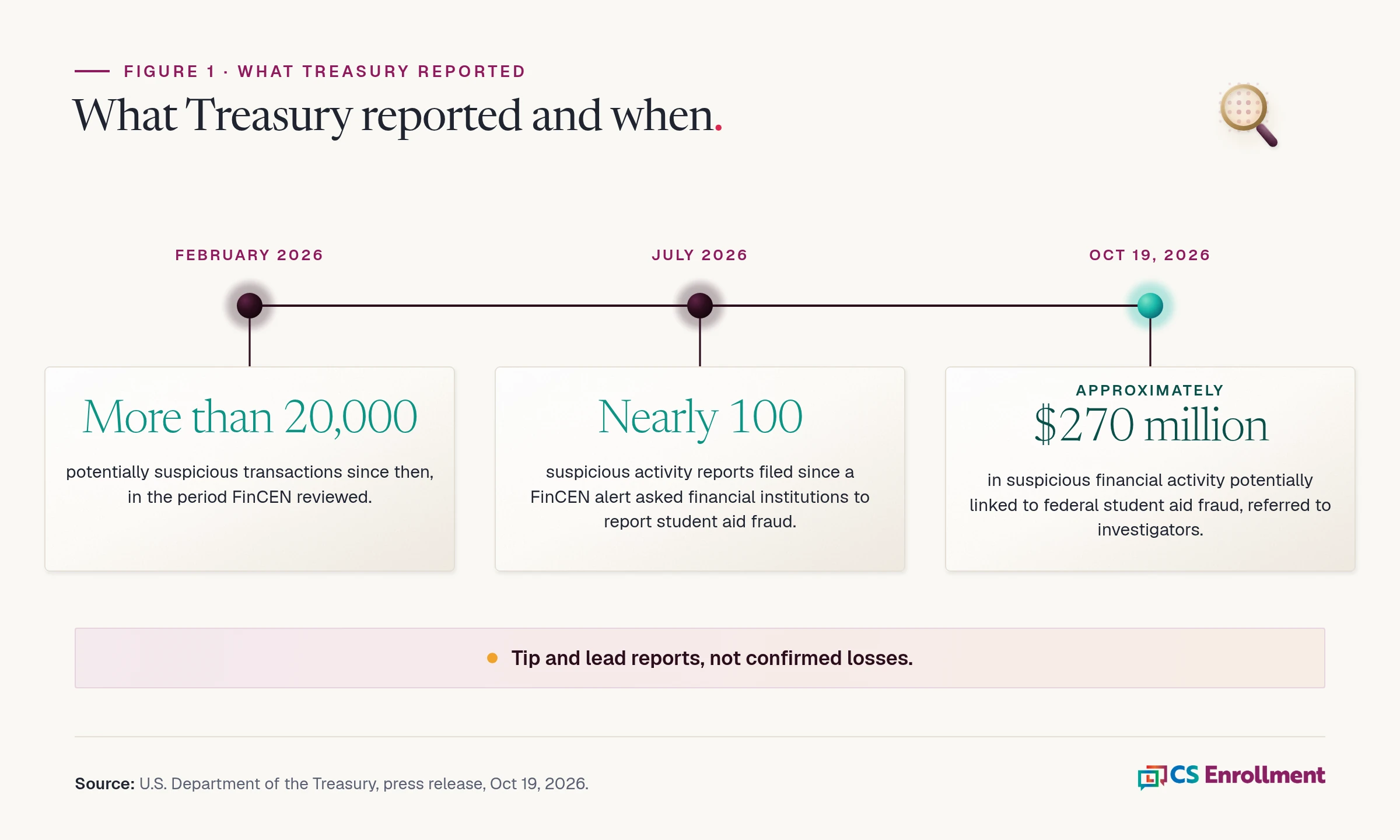
On Oct 19, 2026, the U.S. Department of the Treasury announced that FinCEN had identified approximately $270 million in suspicious financial activity potentially linked to fraud against federal student aid programs. FinCEN referred the findings to federal investigators.
The figure comes from bank reporting. In a July 2026 alert, FinCEN asked financial institutions to report suspicious activity tied to student aid. Financial institutions have filed nearly 100 suspicious activity reports since that alert. FinCEN's review of those reports identified more than 20,000 potentially suspicious transactions since February 2026.
Treasury is careful about what the numbers mean. It says the reports reflect activity that banks identified and reported, and "should not be considered a complete representation" of the scope of the problem. FinCEN passed the information to law enforcement as tip and lead information for further investigation. None of it is a confirmed loss, and none of it is a count of fake students.
What is the difference between a ghost student and a straw student?
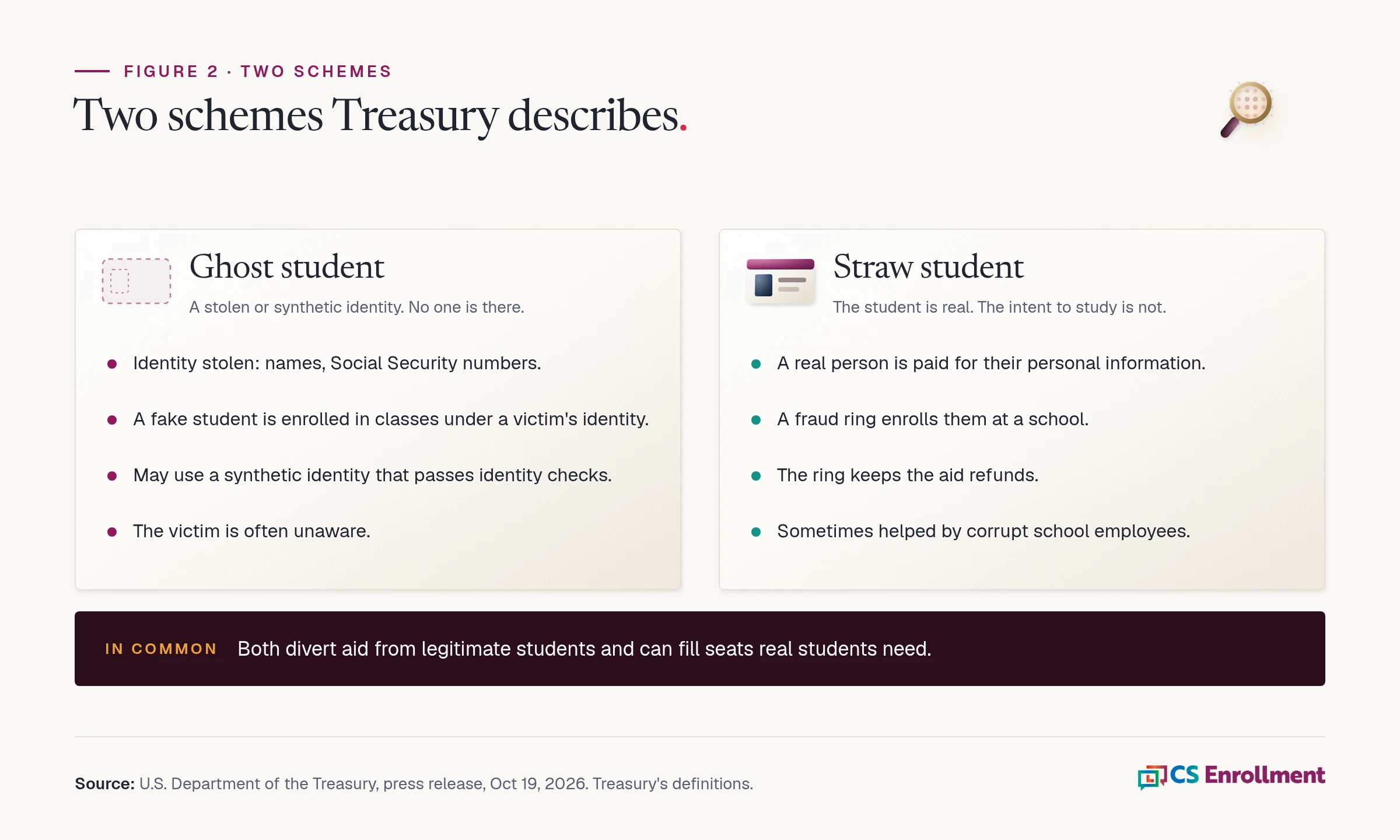
Treasury describes two schemes. In a ghost student scheme, criminals steal personal information, such as names and Social Security numbers, and use it to enroll fake students in classes under a victim's identity. Some combine stolen details with invented ones to build synthetic identities that can pass identity checks. The victim often does not know aid was taken in their name.
In a straw student scheme, fraud rings pay real people for their personal information, enroll those people at a school, and then keep the aid refunds issued to them. The student is real. The intent to study is not. Treasury adds that corrupt school employees sometimes help these rings recruit straw students and alter school records.
The difference matters for an enrollment office. A ghost student may never answer anything, because no one is there. A straw student is a real person who may answer once, then disappear when the questions turn to classes, schedules and plans.
Why should a small college care?
Treasury notes that student aid fraud drains grant money from deserving students and can keep legitimate students out of classes that fake enrollees have filled. At a small college, even a handful of fake enrollments in online sections can close seats a real student needed.
Fraud also distorts the numbers an enrollment office plans with. Fake inquiries inflate the top of the funnel, depress conversion rates and make outreach look less effective than it is. Every message sent to a stolen identity is staff time spent on no one. It also muddies the yield math that a small class depends on, which is why increasing yield starts with knowing which admits are real.
How do you tell a real inquiry from a fake one?
Look for evidence of a person, not just a complete record. A form fill proves that a form was filled. A conversation proves more.
- Answers that fit. A real prospect can say what program interests them, when they hope to start and what is holding them back. Fraud records tend to stop at the fields required to enroll.
- Replies over time. Real students answer a second and third question across weeks. A ghost record goes quiet after the application, and a straw student often drops off once aid is posted.
- Consistency across stages. The program named at inquiry, the courses chosen at registration and the answers in an admitted student survey should line up.
- Contact details that work. Messages that bounce, or a reply that comes from someone other than the student, are worth a second look. Our post on search email deliverability covers the list hygiene side.
None of these signals is proof on its own, and a quiet student is not a fraudster. Many real students take time to reply. The point is to know which records have never shown a person and to look at those before money moves.
What steps can an enrollment office take before aid goes out?
1. Ask real questions early. Start the relationship with two or three short questions about goals and timing rather than an announcement. Our post on survey led student search explains why questions draw more replies. 2. Tag every record by response. Mark each inquiry and applicant as answered, partly answered or never answered. Keep the tag visible to admissions and financial aid. 3. Review the never answered group before census and disbursement. Share that list with financial aid and the registrar so they can check enrollment and identity before refunds go out. 4. Watch online sections closely. Treasury's description of ghost students centers on enrollment in classes. Look for sections that fill fast with students who have never replied to anyone. 5. Agree on who acts. Decide in advance which office reviews flagged records, how the student is contacted and how a real student clears a flag quickly. 6. Keep talking after the deposit. Summer and first week check ins confirm a real student is still on the way. Our post on how to reduce summer melt lays out that plan.
Where do real conversations fit?
A two way conversation is one of the few signals that a person is on the other end. When a student answers a question about their program, then answers again about timing, the office learns something a purchased name or a form fill cannot show.
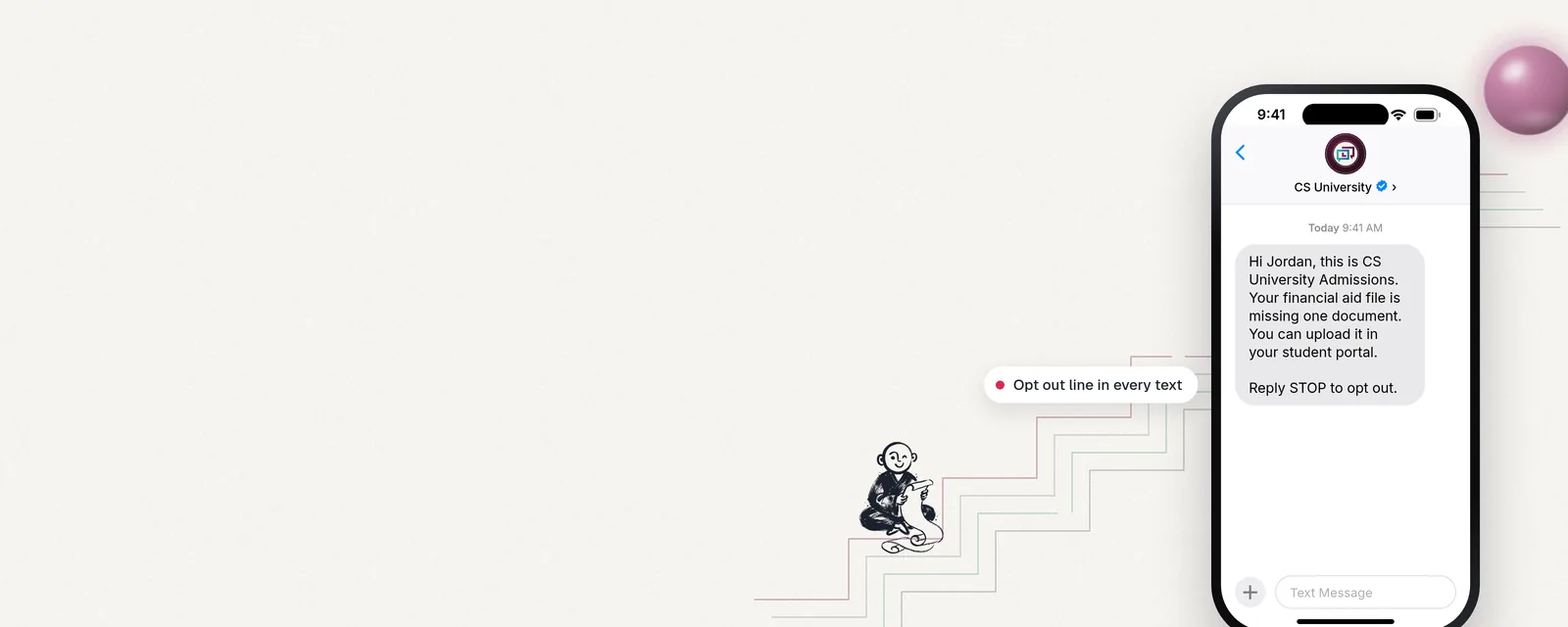
Some colleges run those questions as short surveys by text. Through CS Enrollment Pathways, the survey arrives as a branded, verified message with the college's name on it, and each reply is recorded with the student's record. A reply is not identity verification, and it does not replace financial aid checks. It does show the office which records have a responsive person behind them.
Frequently asked questions
What is a ghost student? Treasury describes a ghost student scheme as one where criminals steal personal information, such as names and Social Security numbers, and use it to enroll fake students in classes under a victim's identity.
What is a straw student? In Treasury's description, fraud rings pay real people for their personal information, enroll those people at a school and then keep the aid refunds issued to them.
How much student aid fraud did Treasury report? FinCEN identified approximately $270 million in suspicious financial activity potentially linked to fraud against federal student aid programs, announced Oct 19, 2026. Treasury says these are tip and lead reports, not a complete representation and not confirmed losses.
How can an admissions office spot fake applicants? Look for evidence of a person: answers that fit, replies over several weeks and consistency from inquiry to registration. Review records that have never responded with financial aid before aid is disbursed.
To see what a short survey looks like on a student's phone, request the sample walkthrough.
Sources
- U.S. Department of the Treasury, U.S. Treasury Identifies $270 Million in Suspicious Activity Linked to Federal Student Aid Fraud.