The short answer: Most closing colleges are small and private, and enrollment is usually the first warning. The ones that recover narrow to a clear reason to choose them and reach nearby students early.
Closure headlines are hard to read if you lead a small college. This is our take on what they mean and what a small team can do about it this year, without panic.
How fast are colleges closing?
Colleges closed or merged at a rate equivalent to nearly one every three weeks last year, according to The Hechinger Report's analysis, and the colleges that have closed or are at risk are overwhelmingly private institutions, as Hechinger reported on Oct 27, 2026.
We are not putting a yearly count on it. Counts vary with how closures and mergers are defined, and the pace is the more useful signal anyway: closure is no longer a rare event, and small private colleges carry most of the risk. For where this fall's enrollment numbers stand so far, see our post on fall 2026 early enrollment counts.
Why do students stay close to home, and why does it matter?
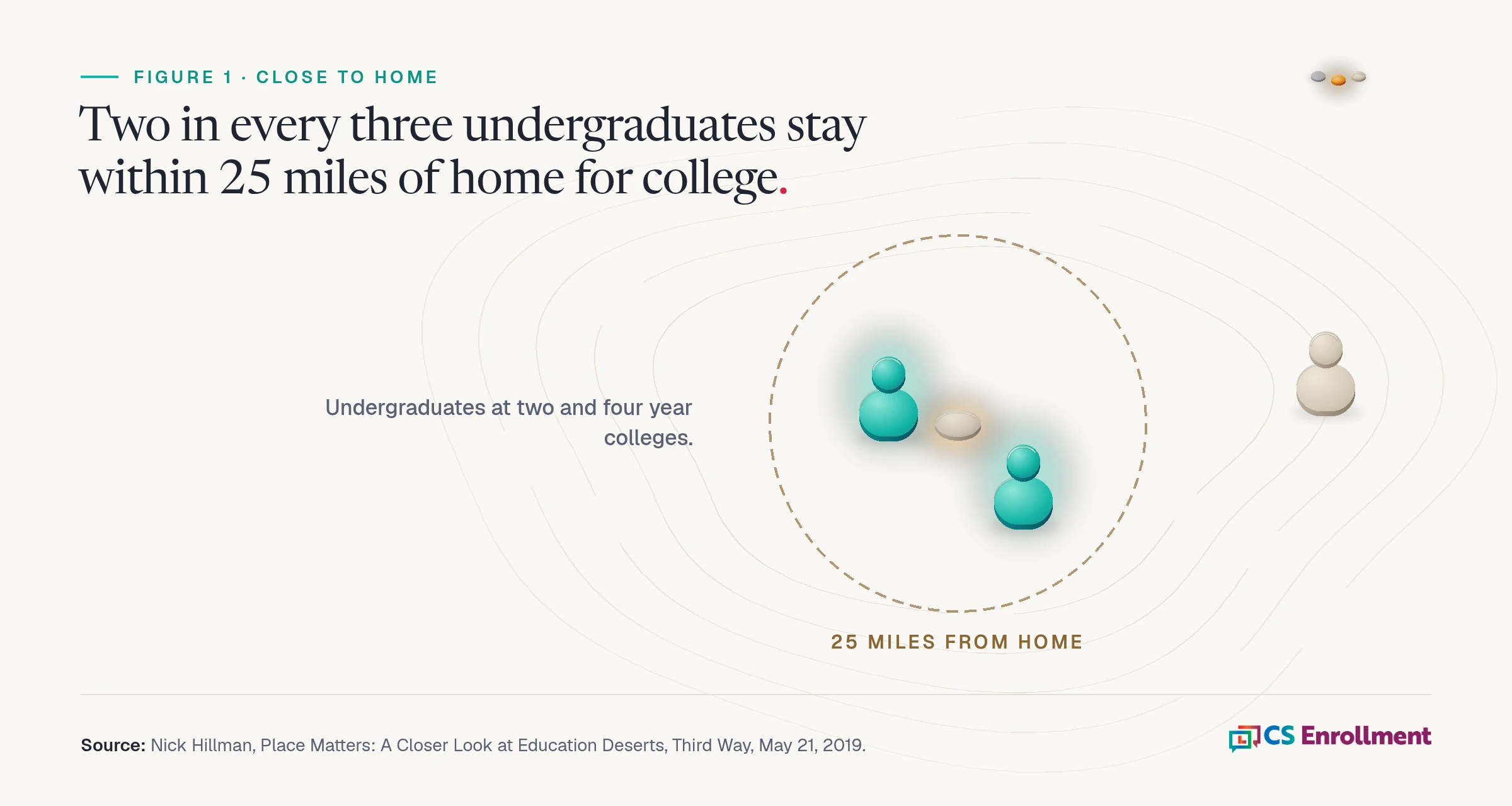
Two in every three undergraduates stay within 25 miles of home for college, according to research by Nick Hillman (Third Way, 2019). That figure covers undergraduates at two and four year colleges together, and students at private nonprofit colleges tend to travel farther than most.
Even so, it tells a small college something useful: the students nearby are a real market, and many of them may not know the college exists, or know it only by name. A college that closes often had students within reach who never heard a clear reason to choose it. Reaching them does not replace recruiting farther away; it means not overlooking the students who are easiest to reach.
What does a recovery look like?
Recoveries we read about tend to follow a pattern. The college narrows its program list to what it does well. It picks a specific identity that a student can repeat in a sentence. Then it recruits the students it can actually serve, often close to home, instead of chasing a broad national pool.
None of that is fast, and none of it is guaranteed. But it is a plan a small team can run.
What recoveries rarely look like is a college trying to be everything to everyone. A long program list spreads a small faculty and a small marketing budget thin, and it makes the college harder to describe. A board that asks "what are we known for?" and gets five different answers has found its first project. The answer does not have to be unusual. It has to be true, specific and easy for a student or parent to repeat to someone else.
Our take: what to do this year
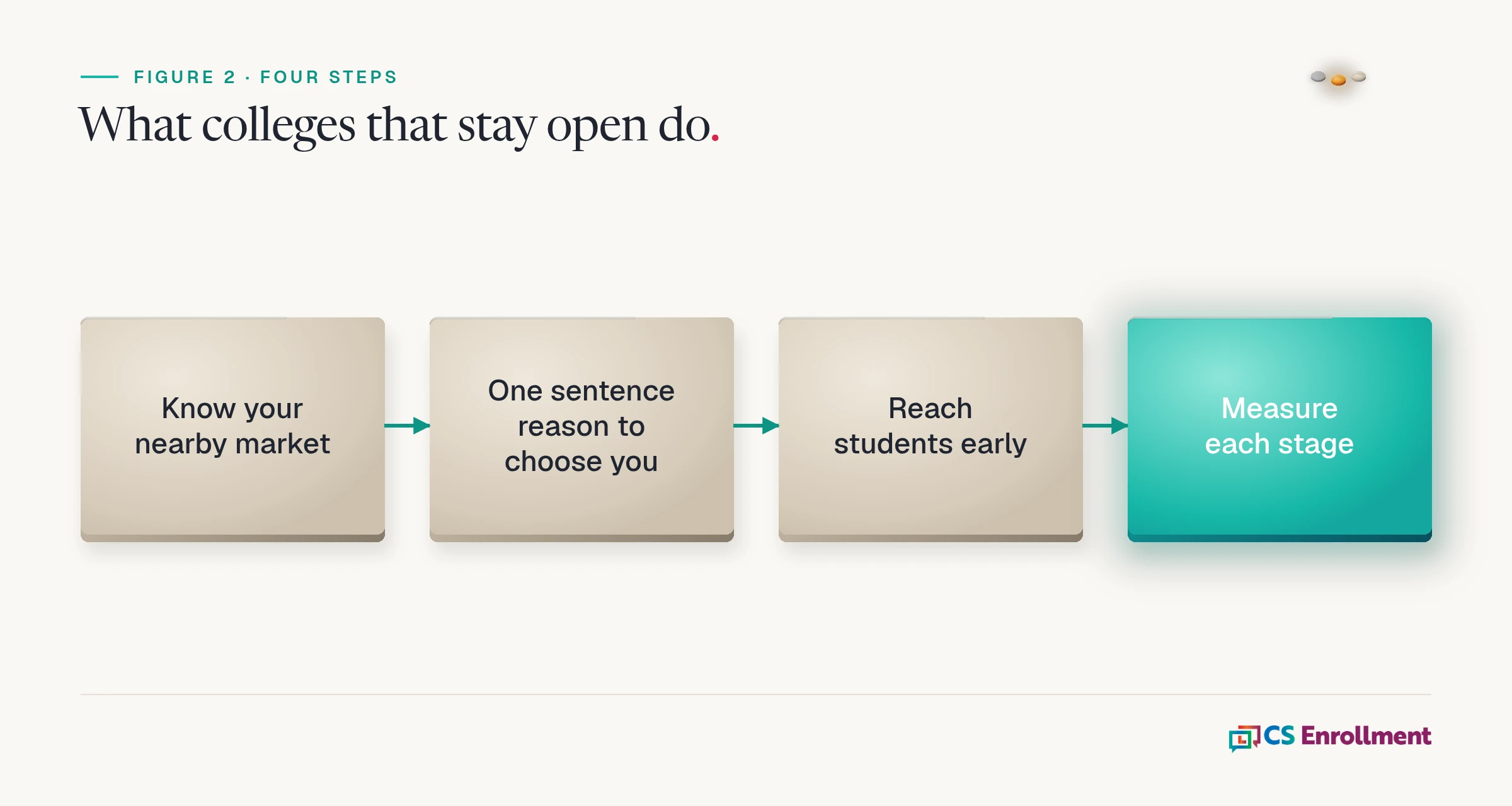
Know your nearby market. List the high schools, community colleges and employers within an easy drive. Start with the students who could commute or visit easily, then widen the list. Find out how many of those students know your name.
Say why a student should choose you in one sentence. If your team cannot agree on it, students will not hear it either.
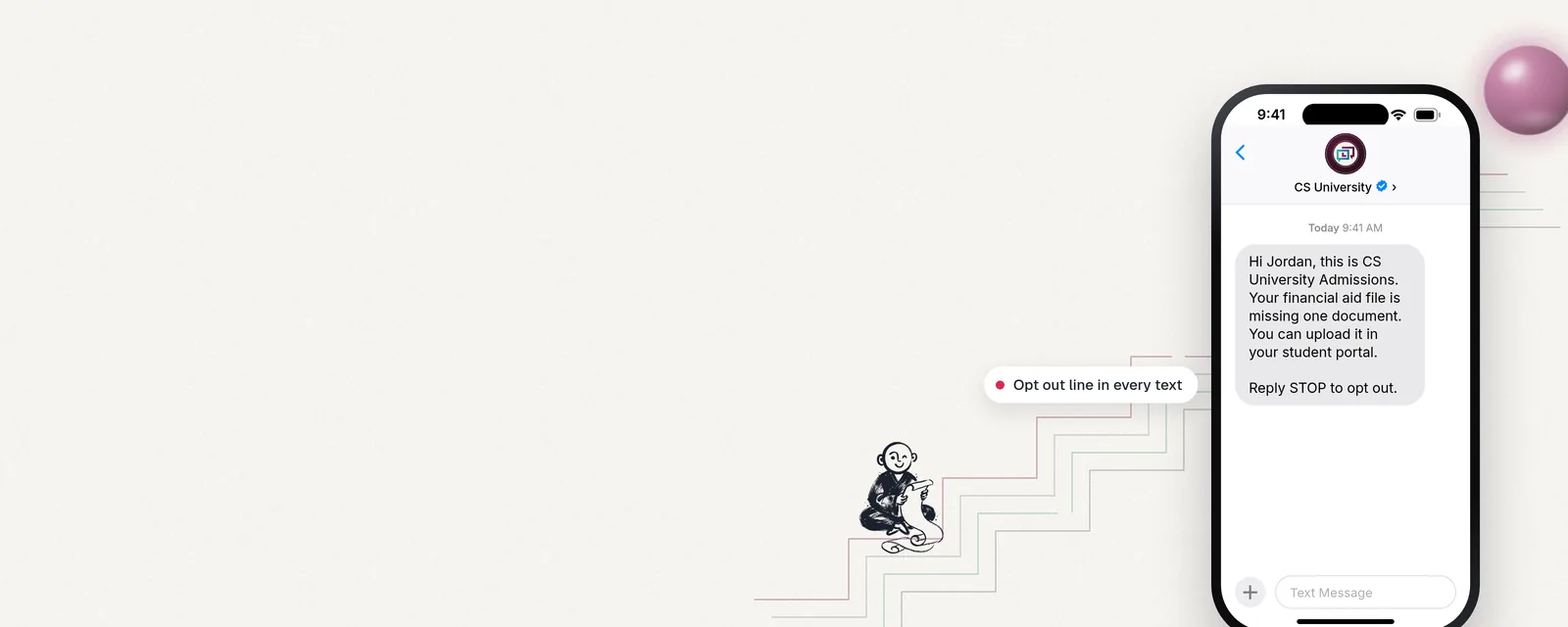
Reach students before they have heard of you. Nearby students who don't know a college exists won't fill out a long form. CS Enrollment Pathways starts with a short survey sent as branded, verified text messaging, so a student says what they want and what they're weighing before the first long conversation.
Measure each stage. Track inquiries, applications, admits and deposits separately so you see where students fall away. Our guide to enrollment funnel stages walks through it.
Don't try to buy the class with discount alone. A bigger award is a price cut, not a reason to choose you. We explain why in our post on the tuition discount rate.
For the longer view, see our posts on the demographic cliff and enrollment marketing strategies for small colleges.
Our take, in short
Closures are real, and they fall mostly on small private colleges. The colleges that stay open give students a specific reason to choose them and reach nearby students before a competitor does. That work starts with what you already control: your message, your speed and your own funnel data.
This is not legal or financial advice; accreditation and finance questions belong with your college's own advisors.
FAQ
Why are so many small private colleges closing? Enrollment is usually the first warning. When fewer students enroll, tuition revenue falls, and small colleges have less room to absorb it.
How many colleges are closing? Colleges closed or merged at a rate equivalent to nearly one every three weeks last year, according to The Hechinger Report's analysis, and most were private institutions.
How can a small college avoid closing? There is no guarantee. The practical steps are a clear reason to choose the college, early contact with nearby students, and honest measurement at each stage of the funnel.
See what a short first conversation looks like
To see how a short survey looks on a student's phone, request the sample walkthrough.