Parents are deeply involved in the college search, and most say colleges leave them short on information. In EAB's 2026 parent survey (vendor research, 2,500+ parents), 74% of parents said they are highly involved in their student's search, and 69% said colleges don't give them the information they need.
The fix is simple to describe. Give families their own short track, built around cost, deadlines and next steps, and send it in the channel they prefer.
Why do parents matter to enrollment?
Families help pay, help decide and often keep the calendar. Enrollment leaders know it. In Niche's State of Higher Education 2026 report (vendor research, self reported, 142 enrollment leaders, March 2026), 76% of enrollment leaders said parent engagement is very important to meeting class fill targets.
For a college of a few hundred or a few thousand students, a handful of families who feel ignored can decide whether the class fills. Parents are part of yield work, which our post on how to increase college yield covers in more detail.
Are colleges reaching parents at all?
Fewer families report hearing from colleges directly. In a 2026 survey by Jenzabar and Spark451 (vendor research, more than 3,500 students and parents, fielded summer 2026, press release October 2026), 74% of parents said they received direct communication from colleges, down from 85% the year before.
That leaves a gap between how much parents care and how much they hear. Many recruitment plans are built around the student, with parents copied on an email now and then.
Which channels do families prefer?
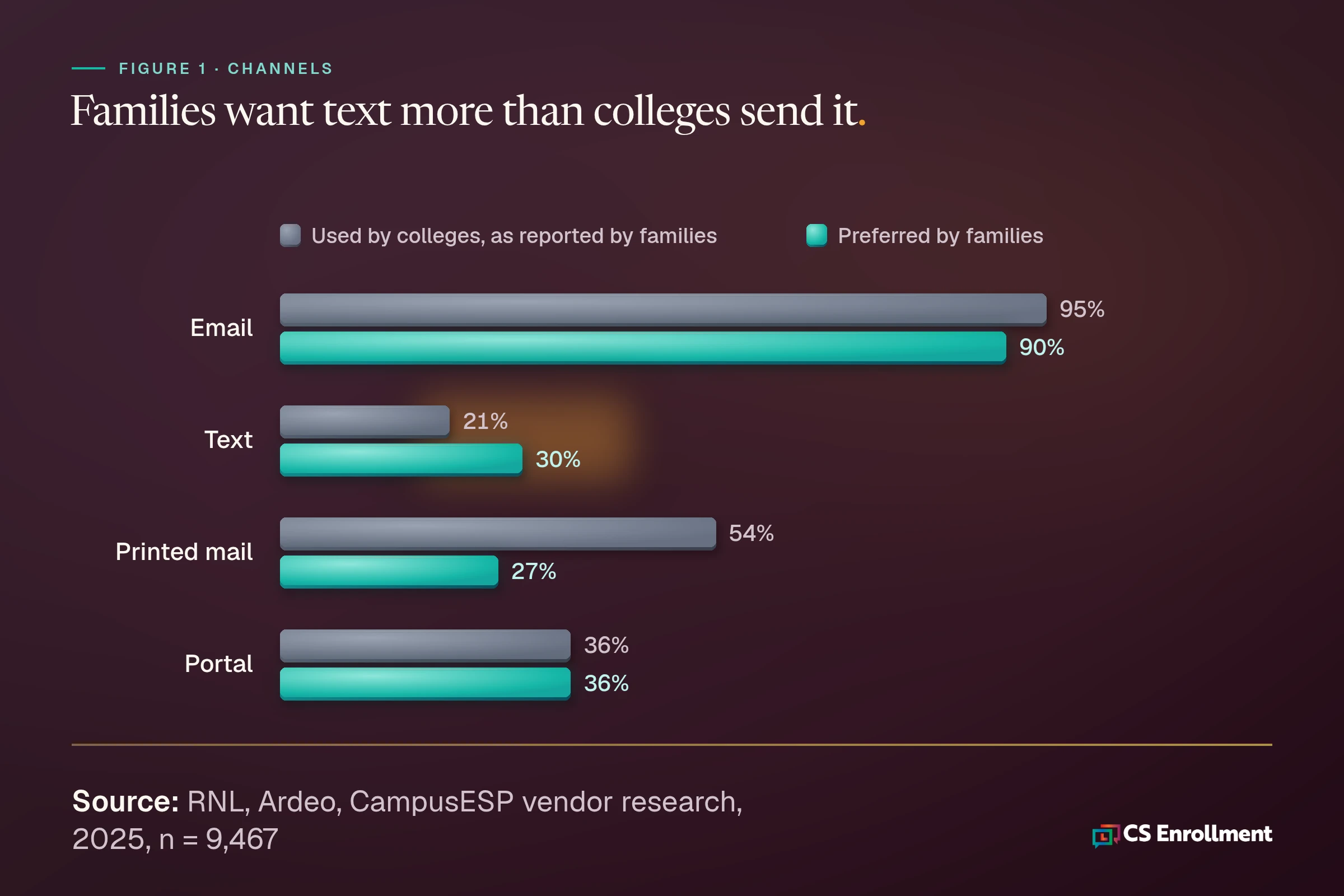
The clearest data comes from the 2025 Prospective Family Engagement Report by RNL, Ardeo and CampusESP (vendor research, 9,467 family responses, 47 institutions). It asked families which channels colleges used to reach them and which channels they prefer.
- Email: 95% of families said colleges emailed them; 90% prefer email.
- Text: 21% said colleges texted them; 30% prefer text.
- Printed mail: 54% said they got printed information; 27% prefer it.
- Family portal: 36% said colleges used a portal; 36% prefer one.
Among first generation families, 36% preferred text, compared with 27% of continuing generation families. Email is still the base. Text is where colleges are furthest behind what families want, and print is where they spend more effort than families ask for.
What should a family track include?
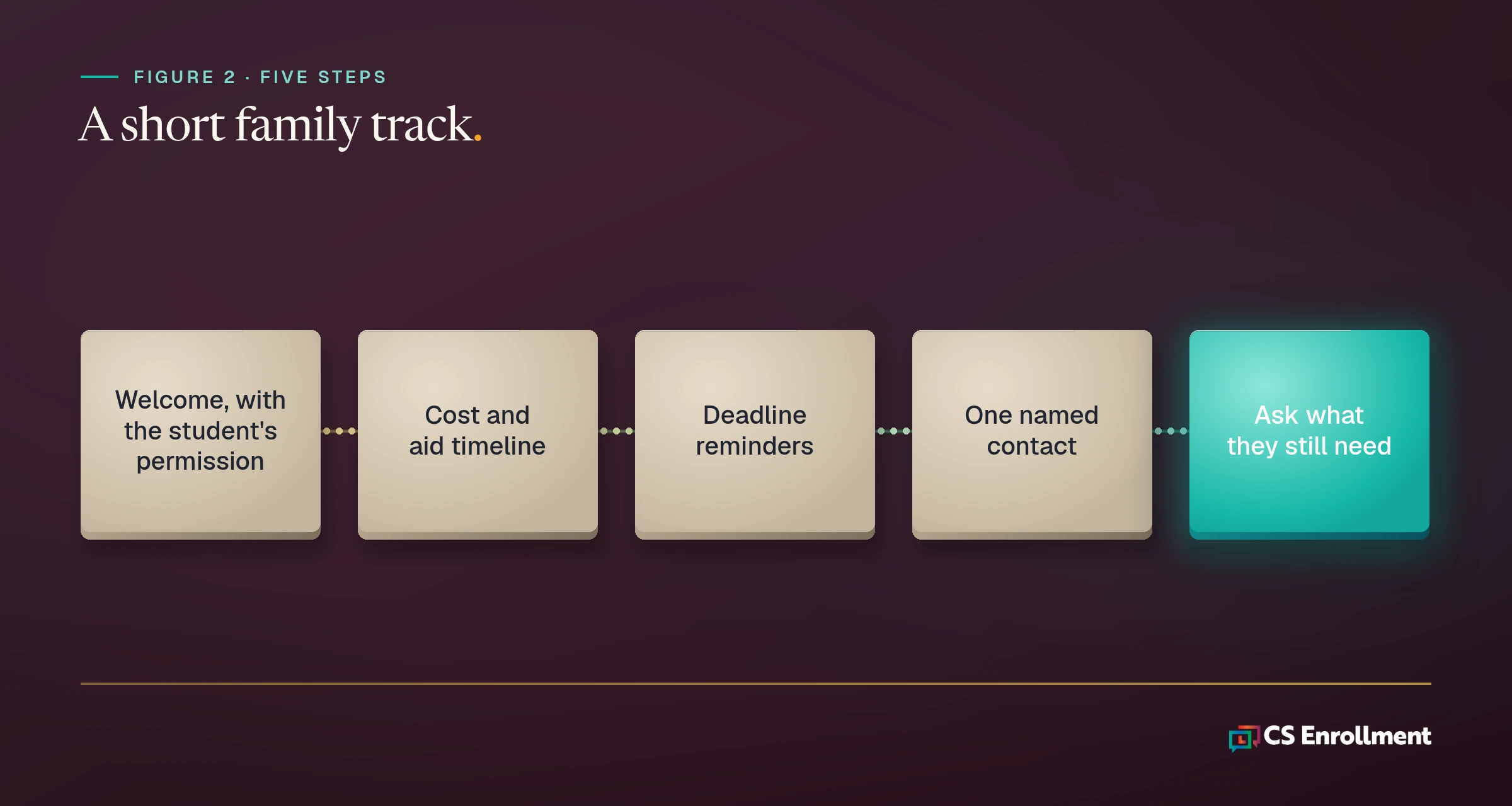
The steps below are practice guidance, not data. Keep the track short. A parent should be able to read each message in under a minute.
1. Ask the student first. Collect a parent or guardian contact on the inquiry or application form, with the student's permission, and note how the family prefers to be reached. 2. Send a welcome message to the parent. Say who you are, what the family will hear from you, and how often. 3. Lead with cost and aid. Share the aid timeline, the FAFSA steps and the date aid offers go out. Cost is often the first thing parents ask about. Our post on how to reduce summer melt covers the aid steps that keep admitted students on track. 4. Remind families of deadlines. Deposit, housing, orientation and aid deadlines, each sent a week or two before it lands. 5. Name one contact. Give the family one counselor's name and a way to reply. A real person beats a general inbox. If that counselor changes, tell the family who takes over and how to reach them. 6. Invite questions. Ask one short question, such as "What is the biggest question your family still has?" The same idea works in an admitted student survey.
When should colleges start contacting families?
Start once the student has shared a parent contact, usually at inquiry or application. Pick up the pace after admission, when cost and deadlines become real. Keep the family track running through the summer, because aid paperwork and orientation steps often fall to parents.
Keep the student at the center. Parents should get the same facts the student gets, framed for the questions parents ask, and never news the student hasn't heard first.
Reaching families in a channel they answer
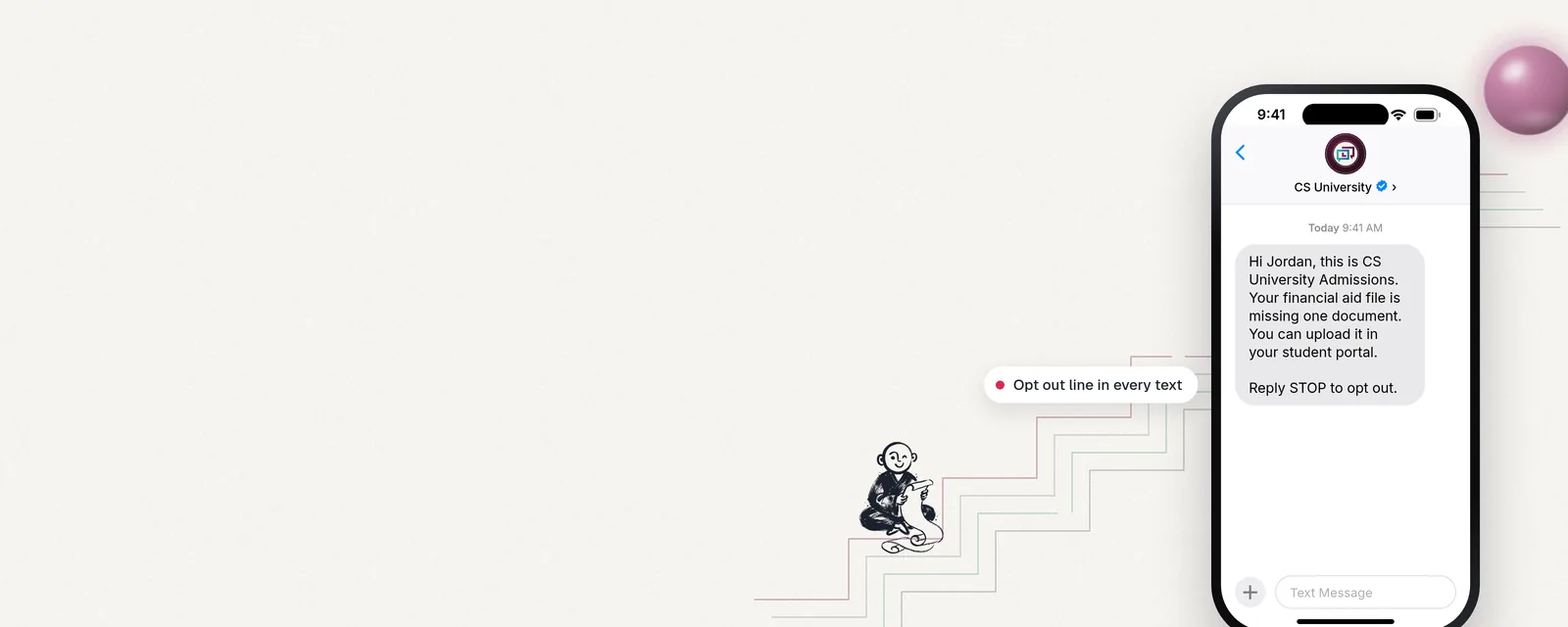
A family track only helps if parents see it. Email reaches almost everyone, but it competes with every other college in the inbox. That is why we built CS Enrollment Pathways to send branded, verified text messaging. Families who prefer text get deadlines and the name of a contact they can reply to, from a sender they can recognize.
FAQ
Why should colleges engage parents in recruitment? Parents are closely involved in the search and often help pay and decide. When they feel informed, the student has one more person helping them finish each step.
What channels do parents prefer for college communication? Email remains the most preferred channel. Text is preferred by more families than colleges currently reach that way, especially first generation families.
When should colleges start contacting families? Once the student shares a parent contact, usually at inquiry or application, with the most attention after admission.
The bottom line
Parents want to help, and many say they are not hearing enough. A short family track about cost, deadlines and one named contact, sent where families read, closes that gap.
See a family message in action
To see how a short, branded message looks on a phone, request the sample walkthrough.
Sources
- EAB, Findings from EAB's 2026 Parent Survey.
- Niche, State of Higher Education 2026. 3, 8.
- Jenzabar and Spark451, 2026 Survey of College-Bound Students and Their Parents.
- RNL, Ardeo and CampusESP, 2025 Prospective Family Engagement Report. 14.