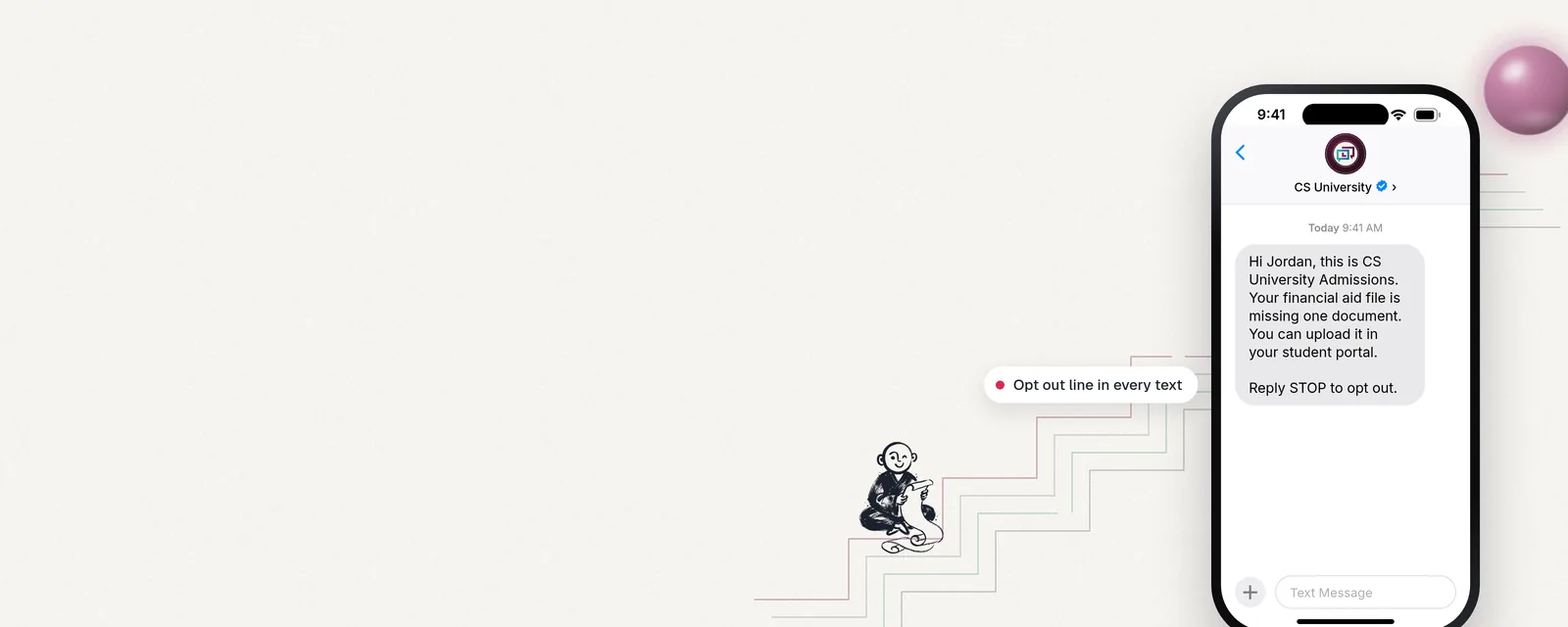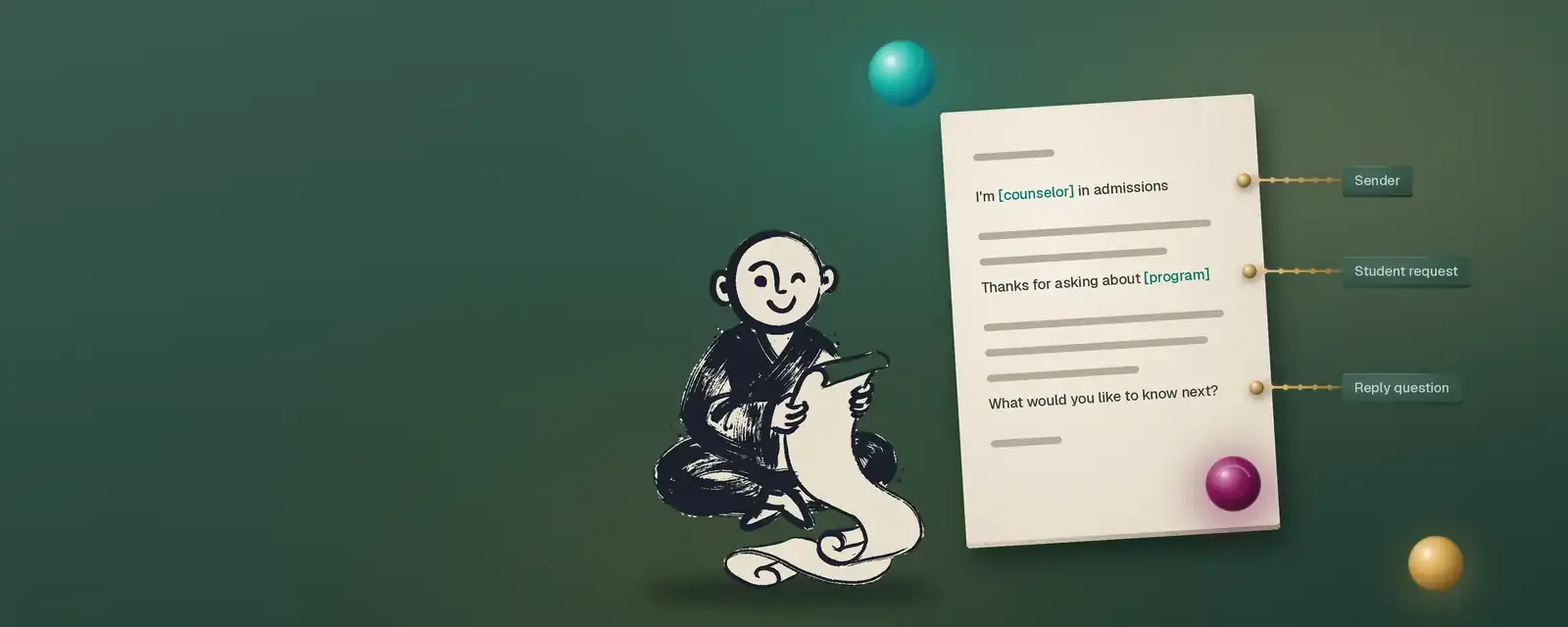
What should the first message to a prospective student say?
A first message to a prospective student should identify who is writing, acknowledge the student's actual request and give a useful answer or next step. If more information is needed, ask a question a counselor can act on. Do not ask the student to apply before understanding what they need.
That is practical writing advice, not a measured formula for more replies. This article covers follow up after a student requests information. It does not establish permission to contact a purchased list.
For a small admissions team, the message and the reply plan belong together. A question is worth asking when someone is ready to use the answer.
What do you know before you send it?
Open the inquiry record before opening the template. Check what the student asked, where the request came from, their preferred channel and the permissions recorded for contact.
Answer an explicit question before asking another. A student who asks whether a program is offered online needs that fact, checked against the current program page. Asking them to describe their interests instead leaves the original request unanswered.
Do not infer a major, aid eligibility or family situation from a broad inquiry. Never claim the student requested information if the record does not support it. If origin or permission is missing, resolve it with the campus owner before outreach. A phone number alone does not establish permission to text.
Use the college recruitment data transparency guide to review the contact trail rather than filling gaps with assumptions.
Should the first reply be an email or text message?
Respect the student's recorded choice and the college's approved contact rules. A survey about preferences cannot replace either.
RNL's 2025 E-Expectations Trend Report is vendor research with an overall sample of 1,582 responses collected electronically in January 2025 from college bound high school students in grades 9 to 12. The overall sample included United States and international residents.
The report asked a hypothetical question: "After you complete a form to receive more information, what are the best ways for the college or university to get back to you?" In its "all students" column, 68% selected email, 40% selected text message and 23% selected phone call. This does not mean all respondents had submitted a form.
These are stated preferences, not reply rates or consent. They are overlapping preference selections, not exclusive shares of a channel mix, and they do not add to 100%. The sample describes high school students, not every prospective student, and the report does not give a separate respondent count for this question.
Use the findings as context, not a reason to move every inquiry into text messaging or abandon email.
What could a first email look like?
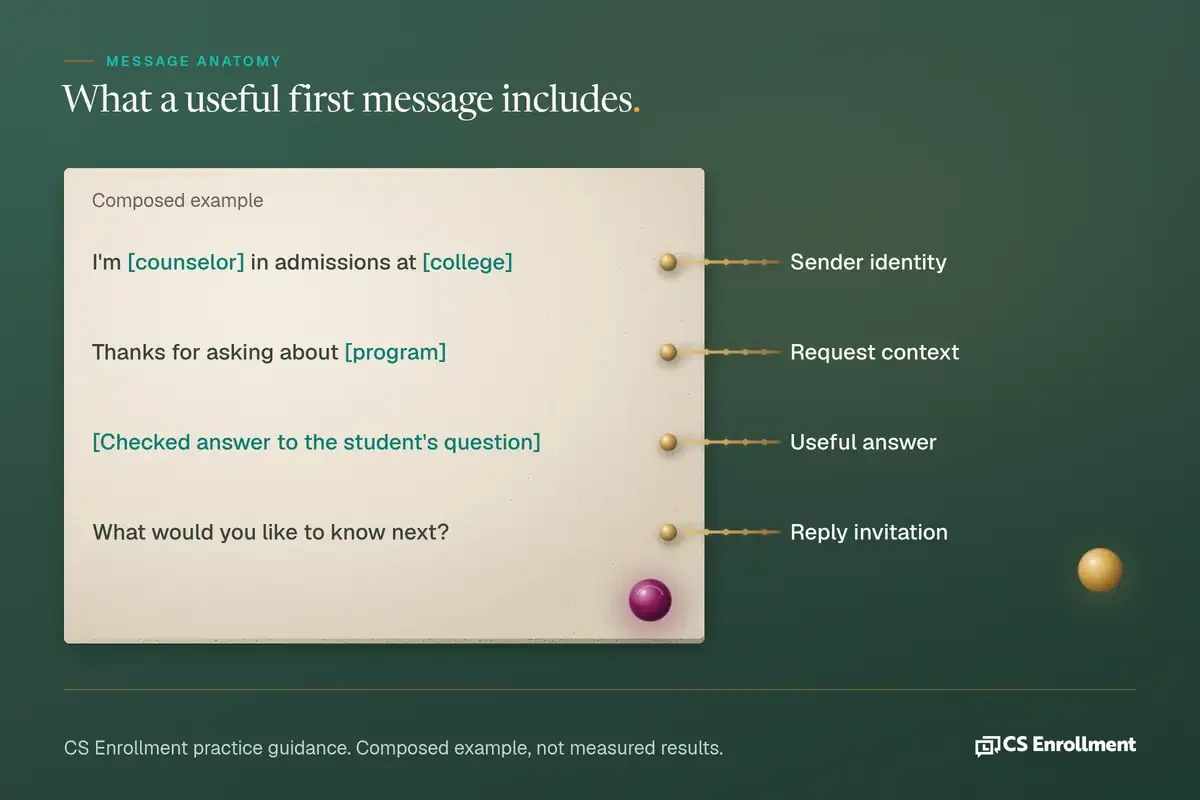
Composed example, not an actual student exchange. Replace every bracketed field before sending.
> Subject: Your question about [program] > > Hi [first name], I'm [counselor] in admissions at [college]. Thanks for asking about [program]. > > [Direct answer to the student's question, checked against the current program page.] > > What would you like to know next? You can reply to me here.
The subject identifies the topic without manufacturing urgency. The opening identifies the sender and connects the email to the actual request. The answer belongs before the invitation to reply.
If the inquiry has no specific question, substitute "What would be most useful to know about [program]?" Do not assume a brochure or visit invitation answers what the student needs.
What could a first text message look like?
For a student who requested cost information, the opening could read:
Composed example, not an actual student exchange.
> Hi [first name], this is [counselor] in admissions at [college]. Thanks for asking about [program]. What would help you understand the cost?
If the student already asked a specific cost question, give the verified answer or the appropriate official resource instead of making them repeat it.
For a visit inquiry, adapt the wording to the request:
Composed example, not an actual student exchange.
> Hi [first name], this is [counselor] in admissions at [college]. Thanks for asking about a visit. Would you like help finding a time?
These examples illustrate conversational wording, not complete compliance templates. Keep the college's approved sender disclosures and stop instructions for the channel. Do not promise financial aid or ask for sensitive financial or identity information in a casual thread.
Include a relevant official link when it answers the question. Do not withhold useful information just to force a reply. These examples carry no promise of a performance lift.
What happens when the student replies?
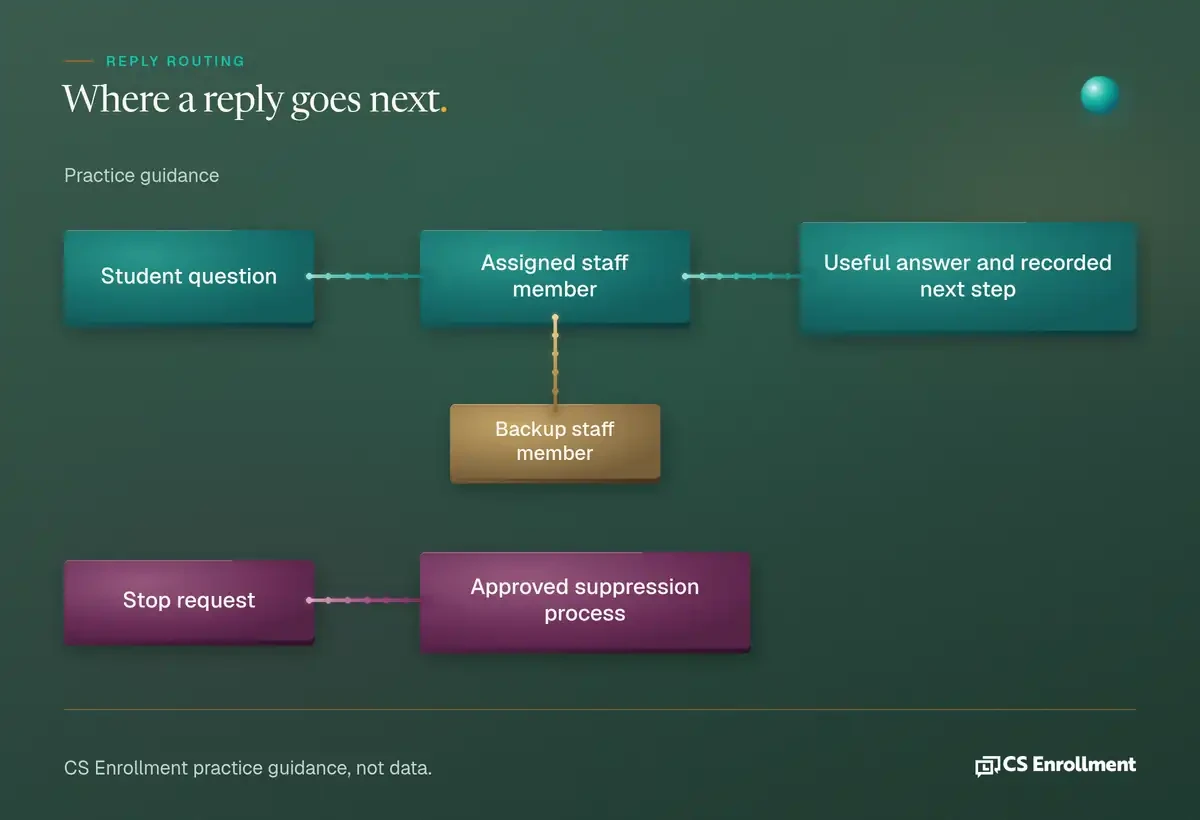
Assign a staff owner and a backup before sending. Set a response expectation the team can meet, including what happens outside staffed hours. Do not imply constant coverage if it does not exist.
Route a program question to someone with current program facts. Give a cost question an accurate resource or an introduction to financial aid. Process a stop request through the college's approved suppression process, not as another chance to persuade.
Record the answer and any agreed next step so another counselor can continue without asking the student to start over. A reply does not automatically mean the student is ready to apply. The survey led student search approach puts that listening into a broader outreach plan.
How do you test a first message without confusing replies with enrollment?
Compare variants within the same inquiry source, stage, channel, time window and contact eligibility rules. Where feasible, assign variants at random and hold other conditions steady.
Define human reply rate before testing: unique students giving a human reply divided by unique students with a delivered initial message in the eligible cohort and response window.
Track substantive questions separately from automatic replies, wrong contacts and stop requests. Honor stop requests regardless of reporting category. Count students, not the total messages they send. Do not pool purchased names with requested follow up.
Start with a blank comparison worksheet:
| Record before comparing | Variant A | Variant B | |---|---|---| | Inquiry source, stage and eligibility | | | | Channel and response window | | | | Unique students with delivered initial messages | | | | Unique students giving a human reply | | | | Substantive questions and staff response coverage | | | | Stop requests and wrong contacts | | |
Track applications and enrollment separately, with their own denominators and windows. A higher reply rate proves neither qualified interest nor causal enrollment lift. Use the inquiry to application conversion guide and enrollment funnel stage definitions for those later measures.
How can a small team put this into practice?
Choose an inquiry source with clear permissions and a named reply owner. Review the template against actual student questions before expanding its use.
CS Enrollment Pathways uses branded, verified text messaging to invite a student reply. Plan who will answer before the message goes out; the product does not replace permission review or staff ownership.
If a student answers your first message today, who owns the reply?
To see how a branded student conversation starts, request the sample walkthrough.
Sources
- RNL, Halda & Modern Campus (2025), 2025 E-Expectations Trend Report. Question specific respondent count not stated.