What should a small college plan for international enrollment in 2027?
Our take: plan fall 2027 on this year's lower number, not on a rebound. Put a named person on every admitted international student between offer and arrival, offer a clear deferral path before a student becomes a no show, and report international enrollment as its own line so a loss there is not hidden in a flat total.
That is our judgment, not a forecast, for colleges of about 250 to 10,000 students that enroll international students or run graduate programs.
What did this fall's surveys find?
The Global Enrolment Benchmark Survey, run by Studyportals (a student recruitment platform) with NAFSA and Oxford Test of English, gathered responses from 437 universities in 63 countries on new international enrollments for the August to October 2026 intake. Results are self reported by institutions. Because Studyportals sells recruitment services, this is vendor research with an association partner.
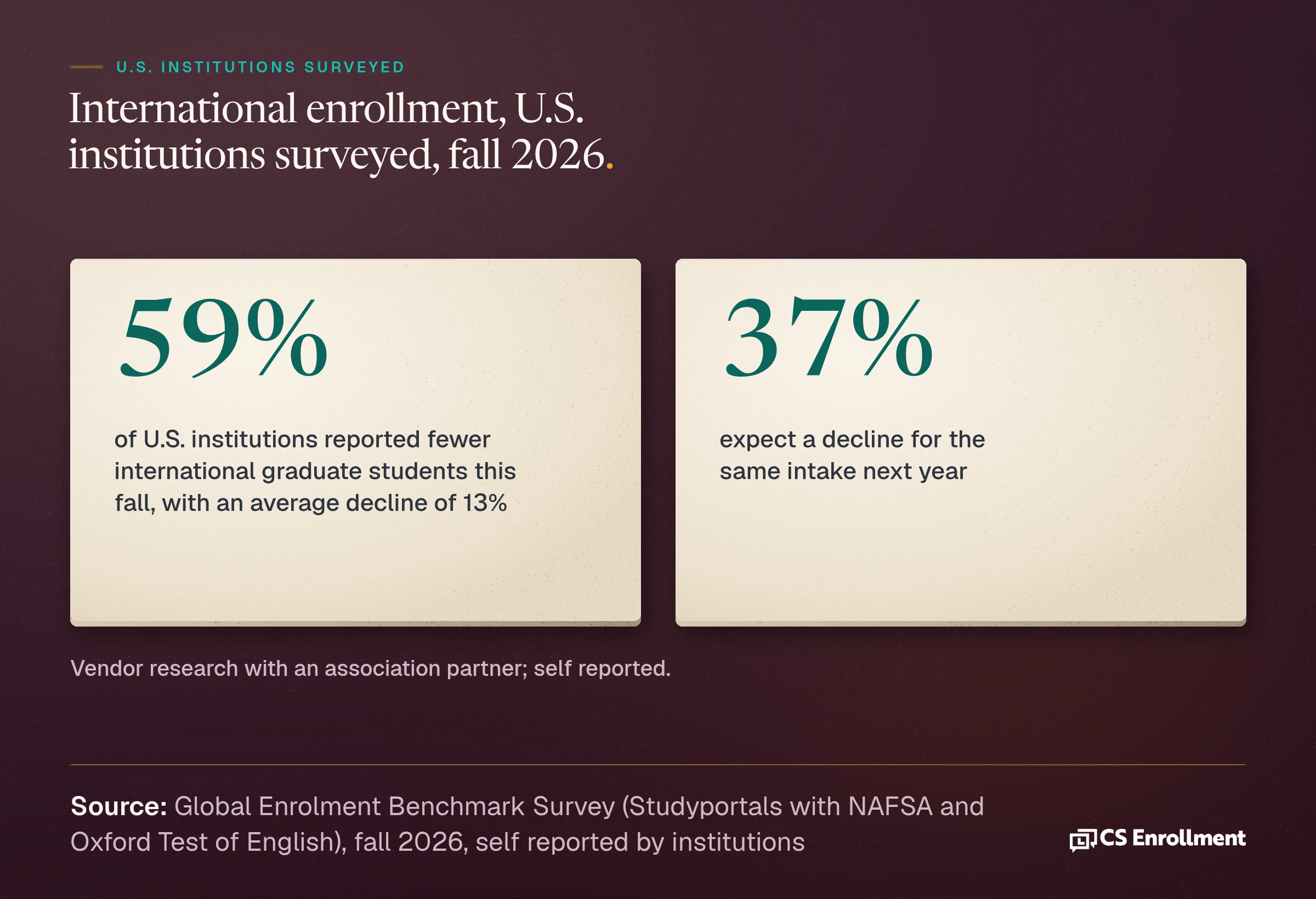
In the U.S., 59% of institutions reported falling international graduate enrollments, with an average decline of 13%, which the survey calls a third difficult autumn in a row. 37% expect a decline for the same intake next year. The 13% describes graduate students only.
As reported by Higher Ed Dive, NAFSA's U.S. results cover 203 institutions surveyed online Oct. 5 to 26. 45% said they had fewer international undergraduates enroll, and 44% expect international enrollment to stay at about this year's lower level. The 45% is a share of colleges, not a size of decline. Higher Ed Dive also reports that 47% cited tuition and living costs as a significant barrier.
What do federal records show?
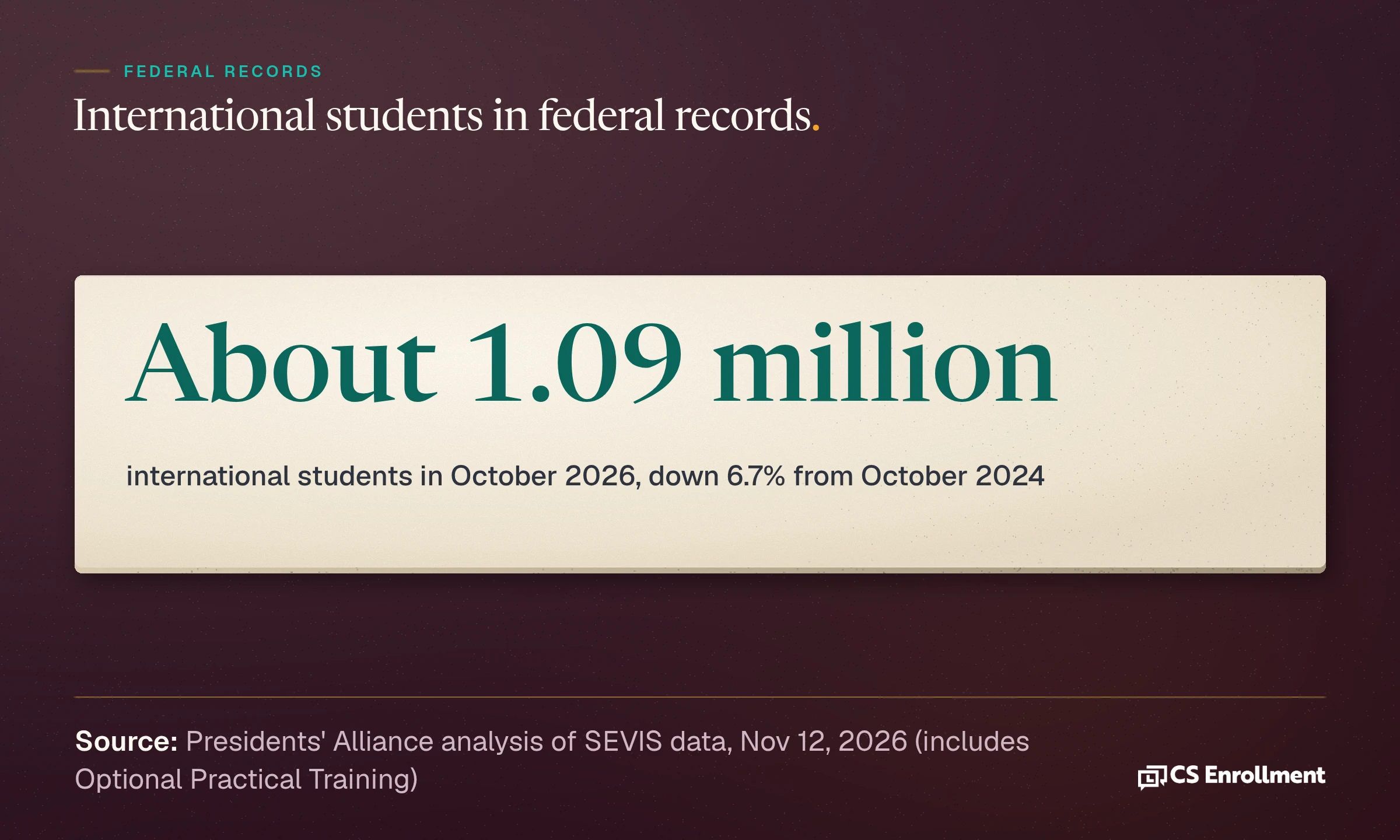
A Presidents' Alliance analysis of federal SEVIS data counts about 1.09 million international students as of October 2026, including students in associate, bachelor's, master's and doctoral programs and those on Optional Practical Training. That is nearly 78,000 fewer than in October 2024, a 6.7% decline in two years. The Presidents' Alliance on Higher Education and Immigration is a nonprofit association of college and university presidents.
It is the association's analysis of federal records, not a survey, and it is not directly comparable to Open Doors.
IIE's Open Doors 2026 report is scheduled for release Nov. 16, 2026. We will update this post when it lands.
Where the loss happens: between offer and arrival
The Studyportals release describes where respondents saw the damage: "Many describe the damage after admission: a shortage of visa appointments, longer vetting and slower permits pushed students past the start date, turning offer holders into deferrals, late arrivals or no-shows."
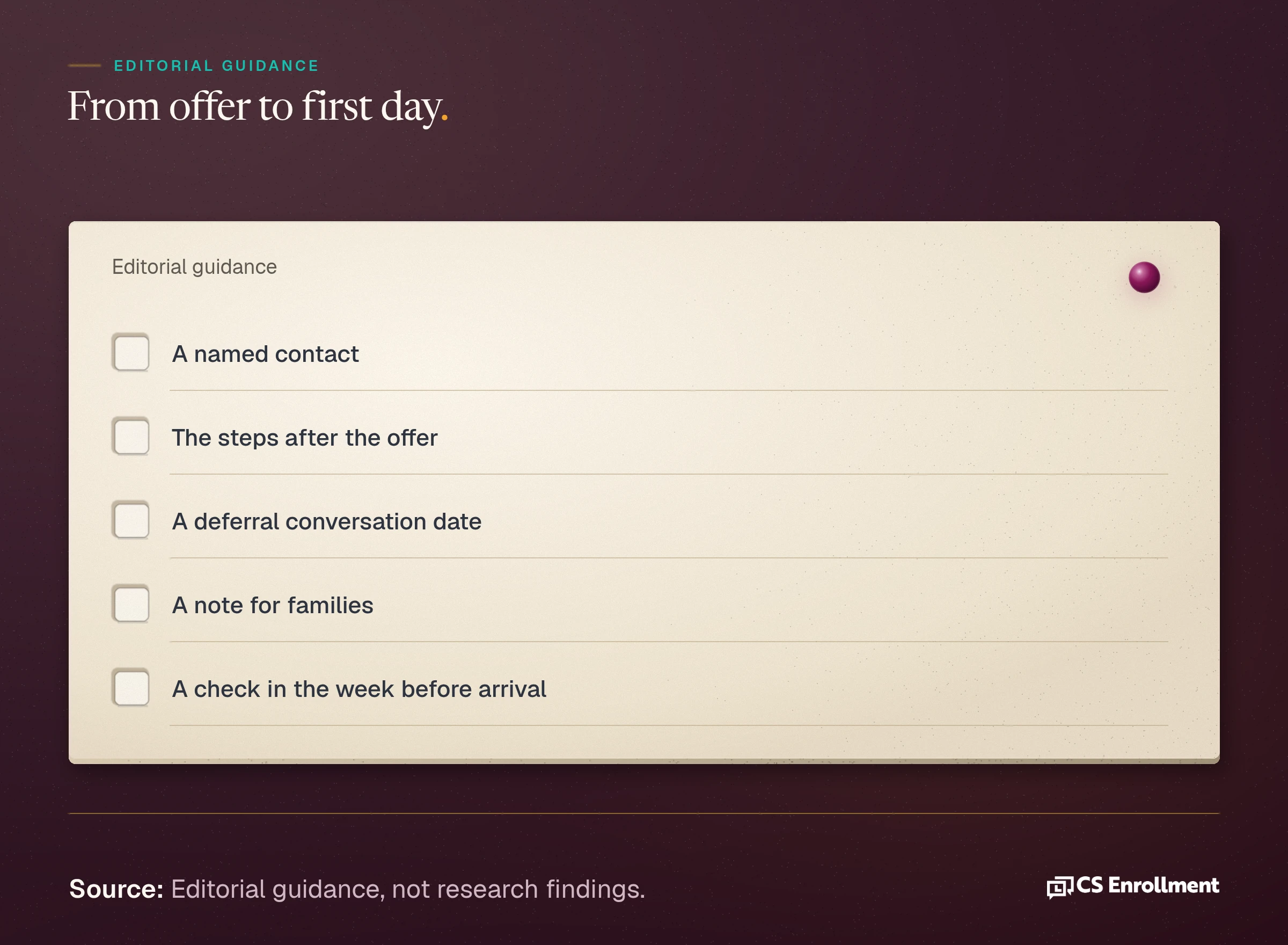
Editorial guidance: for a small college, that makes the admitted international student a yield project. The guide to increasing college yield covers the general work. For international students, add these steps:
1. Name one contact. Every admitted international student gets one person at the college to ask, by name. 2. List the steps after the offer. A plain checklist of what the college needs and when. 3. Set a deferral date. Decide when the college will raise deferral with a student who is running late, so the conversation happens before the start date passes. 4. Write to families. Parents often help with the decision and the move. The parent engagement guide covers reaching them. 5. Check in before arrival. A short message the week before the first day confirms the student is still coming.
This post gives no visa or immigration advice. Point students to your designated school official and to official government guidance for those questions.
What the college still controls
Among institutions worldwide that named something that helped their enrollment, seven in 10 credited an action of their own, led by recruitment activity, staffing and travel. That is a global figure from the subset that named a positive influence, not a U.S. figure, and the size of that subset is not published. Branding and strategic marketing, academic offer and program quality, personalized communication with applicants, and scholarships followed.
Back in the U.S. results, as reported by Higher Ed Dive, 37% of the colleges surveyed plan to diversify their recruiting markets over the next 12 months, 32% plan to expand online offerings and 30% said they would turn to budget cuts. One respondent said staffing issues had "resulted in a lack of attention to incoming students."
Editorial guidance: widen markets only where your office can answer students well, and weigh what each new market costs (the cost per enrolled student post covers that math). If cuts come, check that admitted students still have a person to ask. The first message guide shows what a clear message looks like.
Read international as its own stream
Editorial guidance: report international undergraduate, international graduate and domestic graduate enrollment separately, by program, against last year. A flat total can hide a graduate loss that a domestic gain offsets for one year.
For the national totals, see the fall 2026 enrollment post. For the domestic graduate and working adult pipeline, see the adult learner recruitment guide.
We make no claim about any college's enrollment mix, and no claim that these steps reduce deferrals, no shows or melt.
Common questions
Did international student enrollment drop in 2026? In the Global Enrolment Benchmark Survey, 59% of U.S. institutions reported fewer international graduate students, with an average decline of 13%. A Presidents' Alliance analysis of federal SEVIS data counts about 1.09 million international students as of October 2026, a 6.7% decline from October 2024.
Is international enrollment expected to recover in 2027? Here is what institutions told the surveys. 37% of U.S. institutions expect a decline for the same intake next year. Separately, as reported by Higher Ed Dive, 44% expect international enrollment to stay at about this year's lower level. We make no forecast of our own.
When is the Open Doors 2026 report released? Nov. 16, 2026.
Where messaging fits
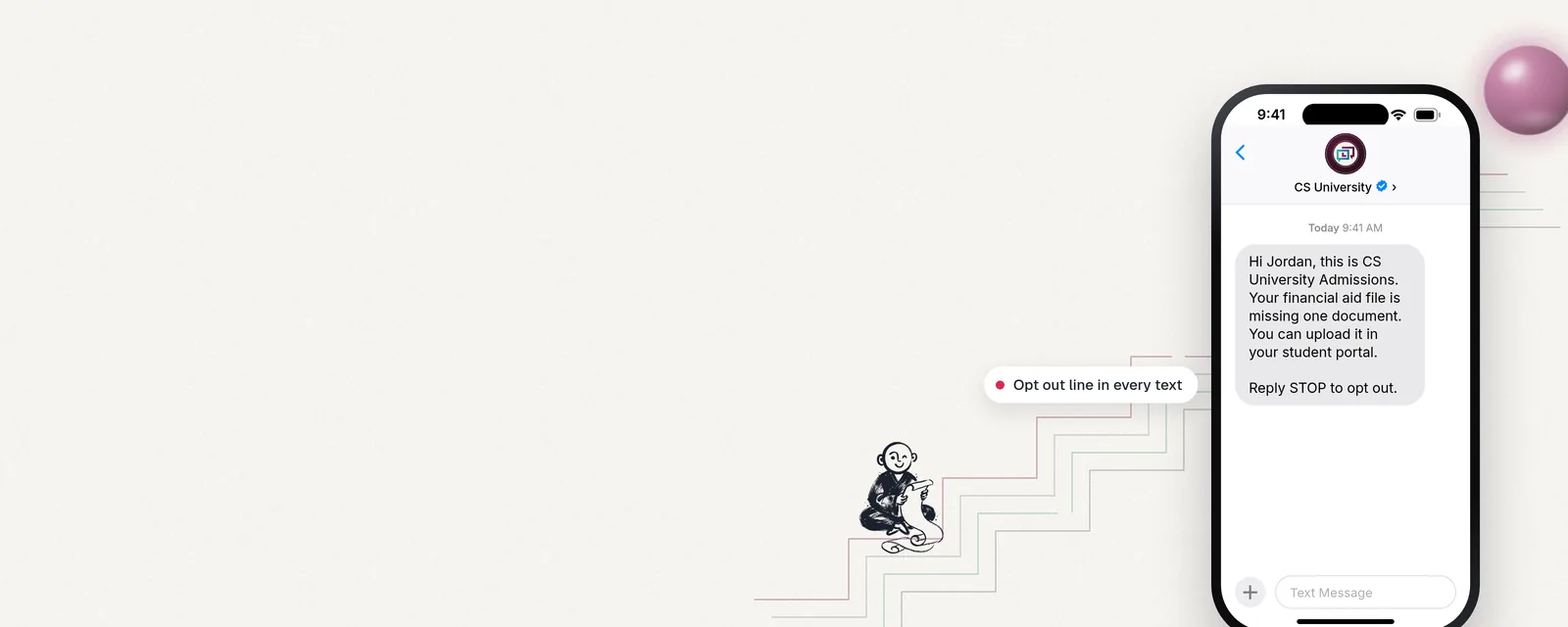
CS Enrollment Pathways helps an admissions team keep in touch with admitted students through the steps between the offer and the first day, with branded, verified text messaging from a sender they recognize, so a question gets an answer from a real person at the college.
How many of this fall's admitted international students did your office hear from between the offer and the start date?
To see how a branded conversation with an admitted student starts, request the sample walkthrough.
Sources
- Studyportals, Visa barriers, shifting government policies push international students away from major English-speaking destinations, towards Asia and Europe. Global Enrolment Benchmark Survey, run by Studyportals with NAFSA and Oxford Test of English. Vendor research with an association partner; self reported by institutions. Paragraphs 2 and 3 (437, 63, August to October 2026 intake, damage after admission); "US universities remain cautious" (59%, 13%, 37%); "What institutions control still makes a difference" (seven in 10).
- Presidents' Alliance on Higher Education and Immigration, Presidents' Alliance Analysis Shows a Significant Drop of 6.7% in Total International Student Enrollment Since Fall 2024. Association analysis of October 2026 SEVIS data. Paragraph 1 (1.09 million, nearly 78,000, 6.7%).
- Laura Spitalniak, Colleges report declines in international enrollment amid federal restrictions. News report of NAFSA's U.S. release. Dive Brief (203, 45%, 47%, 44%); Dive Insight (37%, 32%, 30%, staffing quote, Oct. 5 to 26).
- Institute of International Education, Open Doors 2026 Annual Data Release. Release date and time.