Did colleges meet their fall 2026 enrollment goals?
In one survey, a slim majority did, but it took more work. In The Chronicle of Higher Education's October 2026 survey of some 260 colleges, reported Nov 19, 2026, about 55% were within 1% of the head count they had budgeted for, in either direction, or 1% or more above it. That held for both total undergraduate and first time, full time enrollment. More than 60% of all respondents said this cycle was "more challenging" than the last, and lower than expected yield was one of the top cited challenges.
That is what meeting a goal means here: each college measured against its own budget, with up to 1% below still counting. Respondents included public four year institutions, community colleges and private four year nonprofits.
Read the numbers with the sample in mind. The colleges that answered are not a representative sample: public four year colleges were 44% of respondents, versus about 19% of all degree granting institutions.
The survey measures colleges against their own budgets. National enrollment counts from the National Student Clearinghouse are a different measure, covered in our post on fall 2026 enrollment.
Meeting the goal took more work
Even among colleges that met their undergraduate goals, nearly half said this past cycle had been "more challenging" than the last. Across all respondents, more than 60% said the same.
Lower than expected yield, the share of admitted students who enroll in the fall, was one of the top cited challenges. The Chronicle does not give a percentage for it.
Our reading: in this survey, the pressure many colleges feared did not show up mainly as missed targets. It showed up as effort, and yield, the step from admit to enrollment, was one of the places it showed.
Private nonprofits in this sample were closer to goal
In this sample, 53% of private four year nonprofits reported being within 1% of their budgeted goal in either direction, or more than 1% above it, compared with 34% of public four year institutions. The Chronicle does not say which enrollment measure that comparison uses, or how many private colleges answered, so this is a result for these respondents, not a national ranking of sectors.
Head count and expected revenue moved together
Among the 242 colleges that answered a question about revenue, about 60% expected to receive "around the same" or more than they had budgeted. Among colleges that met or exceeded their budgeted head count goals for undergraduate and first time, full time students, that share rose to 80%.
These are expectations, not final revenue. The pattern is simple: colleges that met or exceeded head count goals were more likely to expect revenue around budget or above it. How much aid it took to get there matters as much as the head count; our post on the tuition discount rate covers what aid spending does to net revenue.
Our take: plan 2027 as if it will take at least as much work
Editorial guidance. None of these steps promises a bigger class. They make next year's plan more honest about the work behind it.
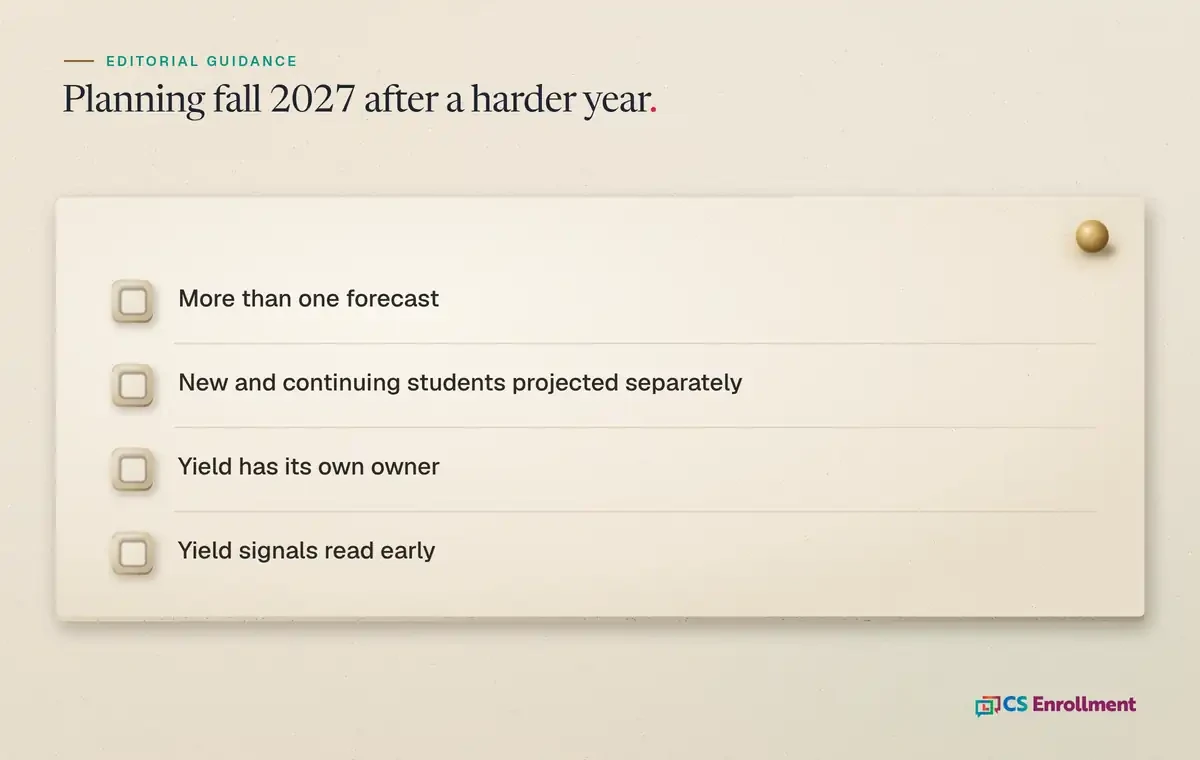
1. Build more than one forecast. A consultant with the National Association of College and University Business Officers (NACUBO), quoted by the Chronicle, advised enrollment leaders to make at least three budget forecasts, "conservative," "expected," and "optimistic." The same advice: project new and continuing students separately, and keep track of how much is being spent on institutional aid. 2. Count the work behind each enrolled student. Head count alone hides a harder year. Our post on cost per enrolled student shows how to add it up. 3. Treat yield as its own stage, with its own owner. Ask admitted students what is still in the way, then answer that one thing. Our posts on admitted student survey questions and how to increase college yield cover the questions and the playbook. 4. Watch the yield signals early. Replies from admitted students and questions about cost show up months before May. Read them in February, not in the deposit count.
Common questions
Did most colleges meet fall 2026 enrollment goals? In the Chronicle's October 2026 survey of some 260 colleges, about 55% were within 1% of their budgeted head count or above it, for both total undergraduate and first time, full time students. The colleges that answered are not a representative sample, and public four year colleges are overrepresented.
Was fall 2026 recruiting harder? More than 60% of respondents said the cycle was "more challenging" than the last, and lower than expected yield was one of the top cited challenges.
Did private colleges do better? In this sample, 53% of private four year nonprofits reported being within 1% of their budgeted goal or above it, compared with 34% of public four year institutions. The Chronicle does not say which enrollment measure that comparison uses.
Where messaging fits
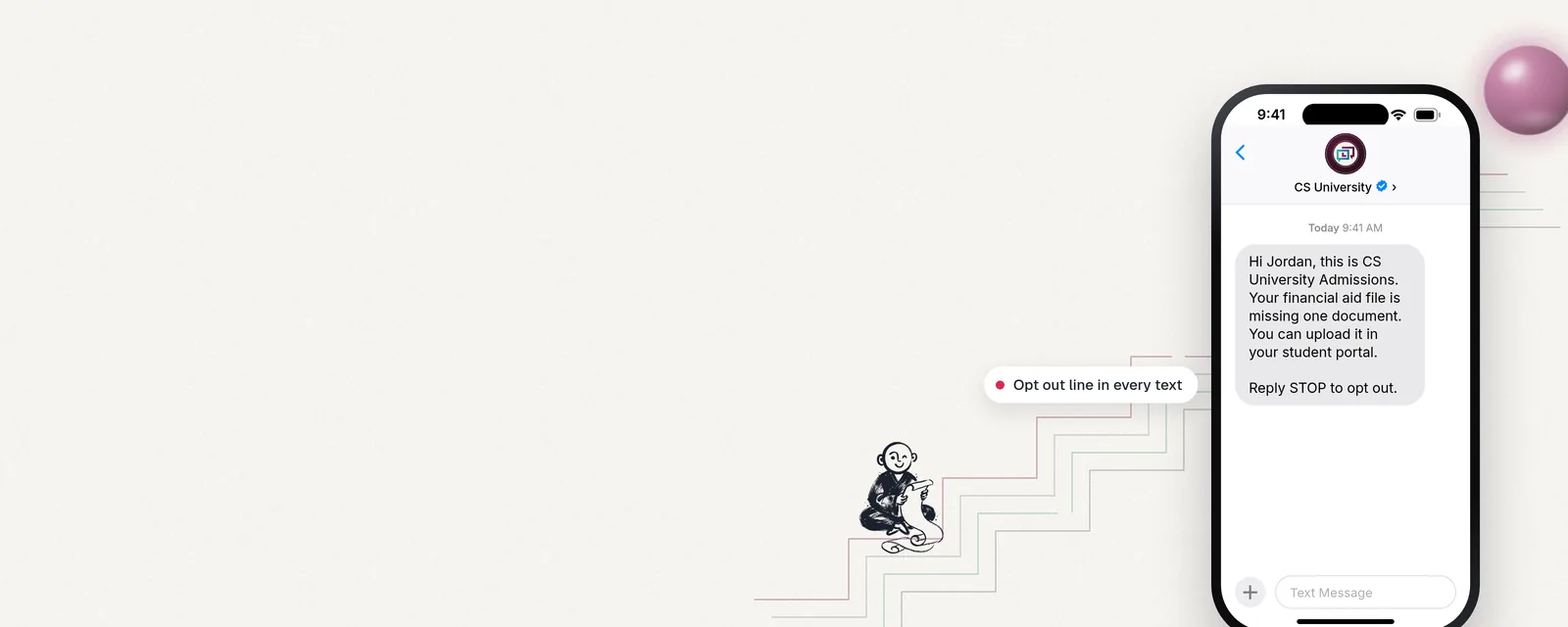
CS Enrollment Pathways lets your team reach admitted students in branded, verified text messaging from your college's name, so they see who is writing before they open it, and a real person can answer the question that stands between an admit and a deposit. A one question start, "What is the one thing still in the way?", is how we work. Contact only students who have agreed to hear from you.
If this year's class took more work, do you know which part of that work actually reached admitted students?
To see how a branded conversation with an admitted student can start, request the sample walkthrough.
Sources
- Taylor Swaak, 'We've Been Pedal to the Metal': New Survey Found Many Colleges Met Key Fall-Enrollment Goals. The Chronicle's October 2026 survey of some 260 colleges; respondents only, public four year colleges overrepresented. May require a subscription.